
September 29, 2026
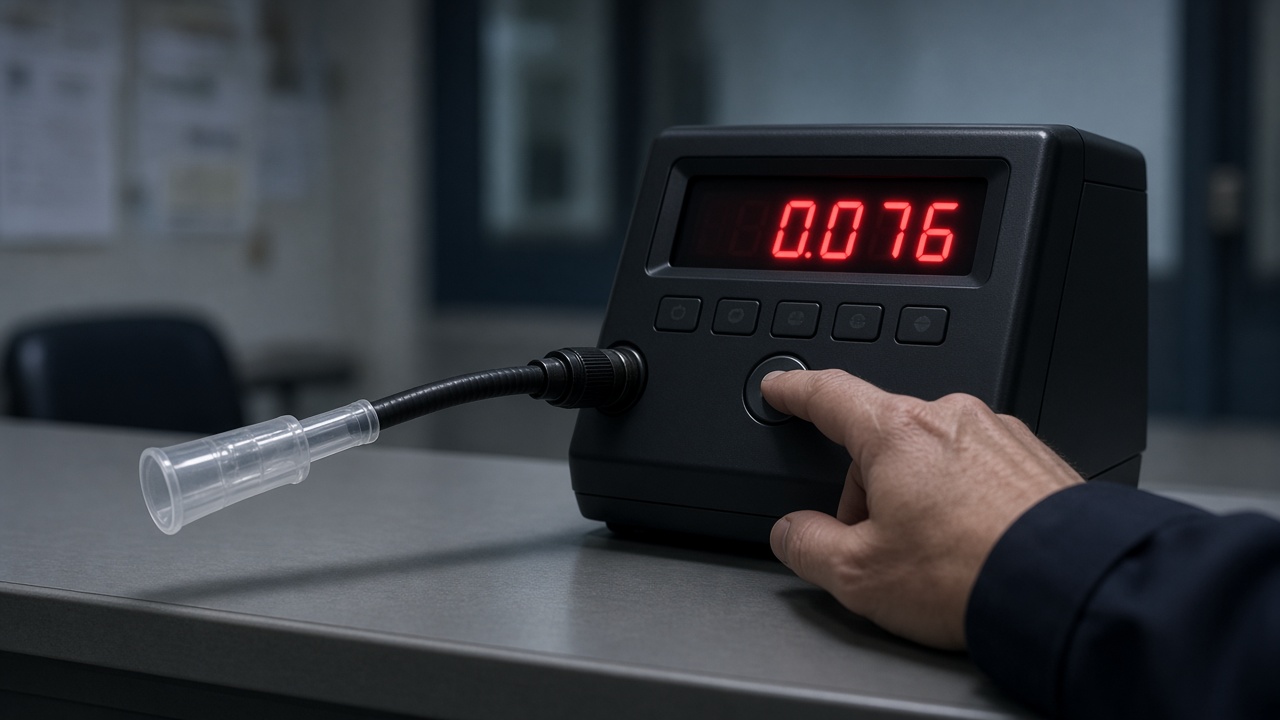
A Breath Test Is Not a Blood Test
A breath-testing instrument does not directly draw blood from a person's body.
It analyzes a breath sample and reports a breath-alcohol concentration.
Florida law defines breath alcohol using grams of alcohol per 210 liters of breath.
Infrared Spectroscopy
Florida's approved evidentiary breath-testing method is infrared spectroscopy, also called infrared light absorption. FDLE's rules identify approved evidentiary breath-testing instrumentation and methods.
In simplified terms, infrared spectroscopy examines how infrared energy interacts with substances in the breath sample.
The instrument then uses that information to determine an alcohol concentration.
Deep-Lung Air
The scientific concept underlying breath testing is that air originating from deep within the lungs has a relationship to alcohol in the bloodstream.
But that relationship depends upon physiological and measurement assumptions.
Why the Defense Examines the Instrument and Procedure
Florida law requires evidentiary breath analysis to be performed substantially according to FDLE-approved methods.
A defense review can therefore include:
Instrument approval;
Testing procedures;
Calibration and inspection records;
Maintenance;
Operator qualifications;
Observation periods;
The actual test sequence;
Error messages;
Data records; and
Compliance with applicable procedures.
The Important Question
The defense does not have to assume that every breath-test number is either automatically correct or automatically wrong.
The appropriate question is:
Was this particular result scientifically reliable and legally sufficient in this particular case?
Defend the Case.